Advertising Restrictions Force Creative Distribution
One of the biggest challenges in regulated consumer goods is reaching customers when traditional advertising channels are limited or entirely closed off. Nicotine products face restrictions across Google Ads, Meta, TikTok, and most programmatic display networks. That means the standard direct-to-consumer playbook of running paid social ads to a Shopify store simply does not work.
This constraint has actually produced stronger brands in many cases. When you cannot buy attention, you have to earn it. Companies that build genuine editorial relationships, create content that people actually want to read, and develop distribution partnerships based on mutual value tend to build more durable customer relationships than those relying purely on paid acquisition.
For founders in any restricted advertising environment, the takeaway is clear: start building organic and earned channels from day one. Do not wait until your ad account gets shut down to figure out an alternative.
Payment Processing Is a Hidden Bottleneck
Most e-commerce founders take payment processing for granted. In regulated industries, it is one of the first operational challenges you encounter. Many mainstream payment processors either decline to work with nicotine brands entirely or impose additional requirements such as age verification, restricted shipping zones, and higher processing fees.
Solving this requires identifying specialized payment partners, integrating age-verification technology at checkout, and building compliance documentation that satisfies both payment processors and state-level regulations. For many early-stage brands, the cost of these solutions is significant relative to revenue, but they are non-negotiable.
The broader principle applies to any regulated product: your technology stack needs to be built around compliance from the beginning. Retrofitting compliance onto a standard e-commerce setup is more expensive and more disruptive than building it in from the start.
Product Differentiation Matters More When Marketing Is Constrained
In categories where you cannot outspend competitors on advertising, the product itself has to do more of the selling. This forces founders to think carefully about what actually differentiates their offering in ways that matter to consumers.
In the nicotine pouch market, differentiation has played out across several dimensions. Moisture content affects flavor intensity and duration. Pouch count per tin affects value perception. Nicotine strength options affect which segments of the market a brand can serve. Flavor range and quality affect repeat purchase rates. These are not abstract branding exercises. They are product decisions that directly impact whether a customer comes bac
Building Trust Takes Longer and Costs More
Consumers in regulated categories tend to be more skeptical. They want to know what is in the product, how it is made, whether it has been tested, and whether the company behind it is credible. Building that trust requires more transparency, more third-party validation, and more patience than most founders expect.
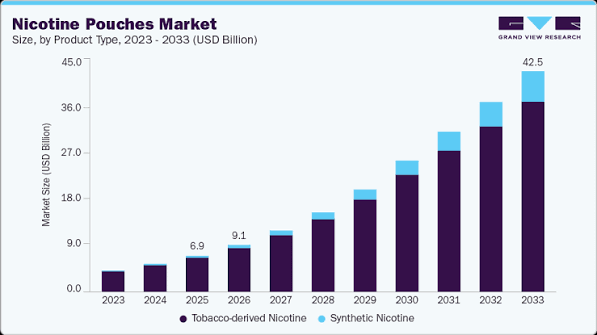
Peer-reviewed research plays a meaningful role here. A 2025 narrative review published in Frontiers in Public Health examined the health-related effects of tobacco-free nicotine pouches and found that chemical analyses consistently show significantly lower levels of harmful constituents compared to combustible tobacco. The FDA’s marketing authorization further reinforced the category’s credibility. Brands that can point to this type of independent, credible evidence have a significant advantage over those that rely solely on their own marketing claims.
Community and Retention Are the Real Growth Engines
When acquisition costs are high and advertising options are limited, the economics of a consumer brand shift toward retention and lifetime value. Brands that invest in building communities around their products, whether through loyalty programs, subscription models, or genuine engagement on platforms where they are allowed to operate, tend to outperform those focused exclusively on top-of-funnel acquisition.
This is especially true in categories where the product is consumed regularly. A nicotine pouch user who finds a brand they like may purchase weekly or biweekly for years. The lifetime value of that customer is substantial, but only if the brand invests in the relationship after the first purchase.
The lesson is universal: in any business where acquisition is expensive or constrained, the path to profitability runs through retention. Build for the second purchase, not just the first.
Final Thoughts
Regulated industries are not for every founder. The compliance costs are real, the advertising restrictions are frustrating, and the operational complexity is higher than in unregulated categories. But for those willing to do the work, these industries offer something valuable: defensible market positions built on barriers that most competitors are unwilling to cross.
The founders who succeed in these spaces tend to share a few traits. They treat compliance as a strategic investment rather than a cost center. They build organic distribution before they need it. They differentiate on product quality because they cannot differentiate on ad spend. And they invest in trust and retention because they know that in a constrained environment, every customer relationship matters more.
Those lessons apply far beyond nicotine pouches. They apply to any entrepreneur building something in a space where the easy path is not available.
Sources:
- U.S. Food and Drug Administration. “FDA Authorizes Marketing of Nicotine Pouch Products.” January 2025.
- “Nicotine pouches: a narrative review of the existing literature.” Frontiers in Public Health, 2025.